


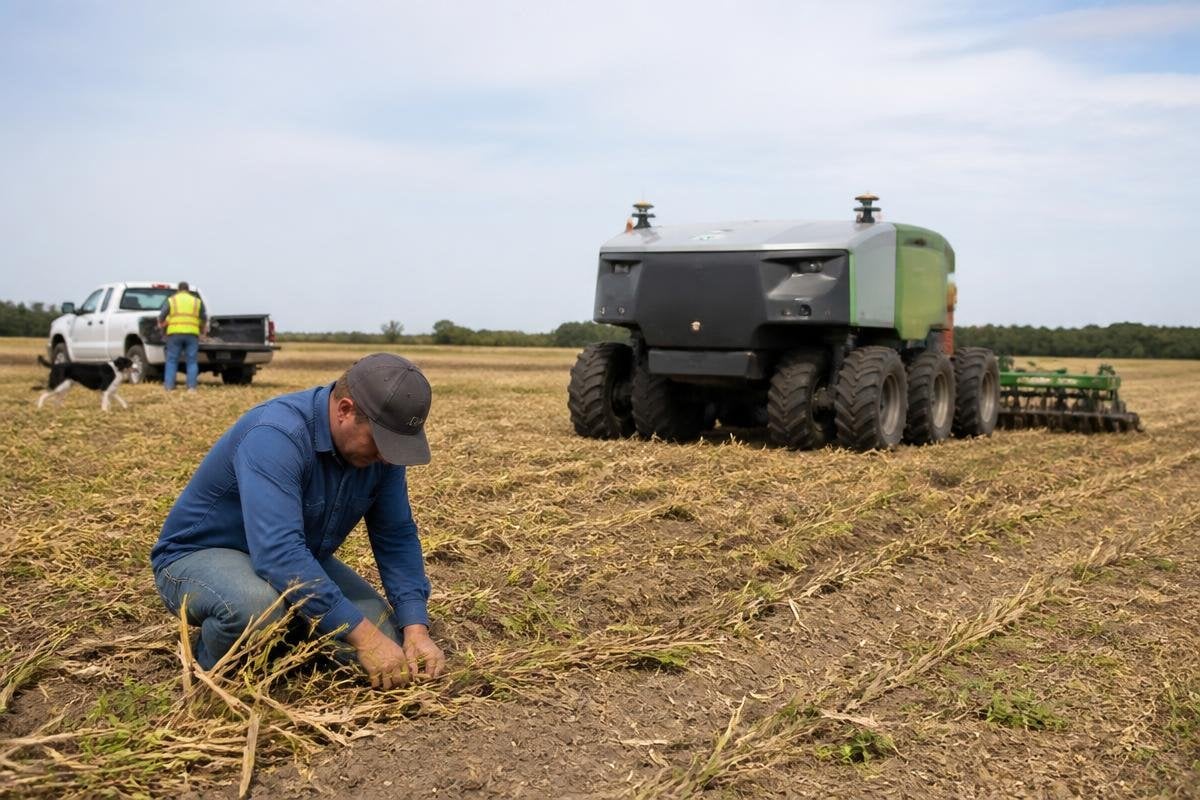
A farm machine can work without a person sitting in the cab, but the field still contains people, animals, vehicles, tools, and changing ground. Safety rules need to cover those conditions, not only the machine’s software and sensors.
Quick read
- Set clear limits for where an autonomous machine may move.
- Require a fast, tested stop command that works near the machine.
- Record safety events so owners can fix repeated problems.
The field is not a closed test area
Autonomous farm machines operate around workers who may enter a field for many reasons. They may inspect crops, repair equipment, move materials, or respond to a machine fault. A rule that assumes the machine will always work in an empty area leaves out normal farm work.
The same problem applies to animals and other vehicles. A machine may face a tractor, a delivery vehicle, a loose animal, or a person carrying a tool. Safety rules should state how the machine detects these objects, how it reacts, and when it must stop instead of trying to pass.
That response needs a plain meaning. A slow turn may be safe in open ground, while a full stop may be needed near a person. The rule should describe the required result, not only list the sensors fitted to the machine.
Stop controls need a real test
Every autonomous machine needs a way for a nearby person to stop it. That control should be easy to find, easy to use, and tested in the same conditions where the machine operates.
A remote stop also needs limits. A radio link can lose contact, a controller can run out of power, or a worker may not have the controller nearby. The machine should move to a safe state when communication fails, with that state defined before the machine enters the field.
The person responsible for the machine needs to know what happens after a stop. Does the machine hold its position, shut down its tools, lower an attachment, or wait for a reset? A safety rule that leaves this unclear shifts the risk to the worker standing nearby.
I’d require owners to test stop behavior at the start of each work period and after software or hardware changes.
Rules should cover the whole work system
A safe machine depends on more than its code. The owner needs a written operating area, a plan for people entering that area, and a way to check the machine before work begins.
Farm rules also need examples beyond a single field. Robotics safety reporting from Robot24.com offers cases where autonomous machines share work areas with people and respond to stop commands. Those cases give farm owners points to check before the rules assign duties to makers, owners, and supervisors.
The rules should also assign responsibility. The maker should explain the machine’s limits and safety functions. The owner should set up the work area and train the people who use it. The operator or supervisor should have authority to stop work when conditions change.
Software updates deserve the same care as physical repairs. An update can change how a machine sees an obstacle, chooses a route, or responds to a lost signal. Owners need a record of what changed, who approved it, and what checks followed.
What better safety rules should require
A useful rule set can stay short if it answers the questions workers face in the field:
- Operating area: What land may the machine enter, and what areas are off-limits?
- Human access: How will workers enter, leave, and work near the machine?
- Stop behavior: What does the machine do after a local stop, remote stop, or lost signal?
- Tool control: Do cutting, lifting, spraying, or other attachments stop before movement continues?
- Change records: Which software and hardware changes require a new safety check?
- Incident records: What must the owner record after contact, near contact, or an unexpected stop?
These points help buyers compare machines on working behavior rather than a sensor list. They also give inspectors and insurers something they can check.
A purchase check for farm operators
Before buying or leasing an autonomous machine, ask for written answers to these points:
- Watch a stop test with the machine moving toward a marked boundary.
- Check how the machine reacts when its control link is lost.
- Ask how a worker can reach the stop control during field work.
- Confirm what happens to the attached tool after a stop.
- Get the software update process and safety-check record in writing.
If the maker cannot answer these questions, the machine may still work well in a controlled demo. That does not show it is ready for a field shared with people and other vehicles.
The next useful rule is the one a worker can follow under pressure: where the machine may go, how it must stop, and who has the final say.
